
By Bruce Hennigan @bhennigan55
Do you know your potential audience? Jesus knew his audience well. In Matthew 22:15-22 (NIV), Jesus is confronted by the Pharisees about the question of should they pay their taxes. Jesus answered them: “But Jesus, knowing their evil intent, said, “You hypocrites, why are you trying to trap me? Show me the coin used for paying the tax.” They brought him a denarius, and he asked them, “Whose image is this? And whose inscription?”
Jesus knew their minds, their thoughts, and their desires and intentions. As Christian writers committed to writing for the world around us, we need to understand three segments of American culture as prospective audiences: WND. WND stands for WONS, NONES, and DONES.
WONS
Definition: “Their hearts have been so arrested by the love and grace of Christ that they are wholly captive to the mind and heart of God. Their combination of Bible-based convictions and spiritual practices has transformed them into a different type of people. They have successfully (although not perfectly) blended biblical beliefs, spiritual behavior, and their lifestyles into an integrated way of being.” “The Air We Breathe” by Glen Scrivener.
Only 16% of the American population comprises this group, according to the Barna Institute as of 2023. This is our default audience as Christian writers. And this group can be broken down into those sub-genres listed at the start of this post. Writing for this group is a given. My book, “Our Darkness, His Light,” set during the last week of Jesus’ life, focuses on WONS. “The Homecoming Tree”, a story about the “Greatest Generation” at the start of World War II, is another.
NONES
“The ‘nones’ are a growing segment of Western society — those who, when asked on a survey for their religion, reply ‘None’.” “The Air We Breathe” by Glen Scrivener.
“Religious ‘nones’ are people who describe themselves as atheist, agnostic or “nothing in particular” when asked about their religious affiliation in our surveys.” — Pew Research (https://www.pewresearch.org/religion/2024/01/24/who-are-the-nones-how-are-they-defined/)
26% of Americans as of 2023 are nones.
More disturbing to me, among “nones,” 69% are under the age of 50, while 31% are 50 or older. By comparison, 45% of U.S. adults who identify with a religion are under 50, while 55% are ages 50 or older. “Nones” overall are roughly split between men (51%) and women (47%). The populations of atheists and agnostics include far more men than women. The same is not true for people whose religion is “nothing in particular.” — Pew Research
I am a Christian apologist in the discipline of defending the truthfulness of the Christian faith through evidence from history, science, and philosophy. One of my favorite authors was Michael Crichton who would take unrelated facts (dinosaurs, genetic engineering, and chaos theory) and build exciting and thrilling stories on their foundation. What if I could do this with some of my apologetic training?
Why was I compelled to think this way? I had a passion for what I called “crossover” stories, hoping that someone who had no religious affiliation might pick up one of my books, intrigued by the subject and get exposed to the Christian worldview.
Did it work? I received an email from a reader after my second book, “Demon 12: Wolf Dragon,” came out. The main subject is vampires. This reader said his teenage brother had denounced his faith in Christ, and he wanted to know if it would be appropriate for him to read this book. I assured him it was, since one of the main characters is a teenager. A few months later, a follow-up email came. The brother had come to know Christ, and his brother attributed my book as the main factor! How do you wrap your brain around that? I thanked God, and if this is the only person touched by my books, it is worth it all. And I give God all the glory.
This is a tough audience to reach. There is an implicit bias against the supernatural. But with prayer and the power of the Holy Spirit, our stories can reach them!
DONES
“Perhaps you are familiar with Christianity, but you’ve rejected it. You say, ‘Been there, done that. 13 years at a church school. No thanks!’ Or you say, ‘I studied Christianity at one point or another.’ Or, ‘I was a regular church goer, but it’s no longer for me.’ You might feel that Christianity is unequal, cruel, coercive, ignorant, anti-science, restrictive, or backward.’ You are done with Christianity.” Glen Scrivener
My heart burns for these people. They have been hurt, disappointed and brushed aside by wrong answers to tough questions. I meet “Dones” all the time in my work with apologetics. I have learned that academic answers are NOT what they need. Rather, they need empathy, compassion, and, most importantly, HOPE. Here is where we have a ready-made opportunity to share our stories of redemption, unconditional love, salvation, rescue, and the hope we have in the God of second chances. Stories based on the hardships we have faced in life and how God has worked us through those times can resonate with a Done. They want answers. They want hope. We can supply it without being judgmental or arrogant. We can tell stories of the wonderful, forgiving love of Christ. How many Americans fall into this category? About 20%. My books, “Shadow Merchant” and “Merchant of Justice,” feature a man struggling with failure and loss. My non-fiction book, “Hope Again: A Lifetime Plan for Conquering Depression,” specifically focuses on hurting people among all three groups.
In conclusion, Christian fiction writers have a built-in audience with the WONS. But perhaps God has laid the Nones and Dones on your heart. We can write stories that reach them. After all, we have the best example of the effectiveness of such stories to the unfaithful. Jesus Christ and his parables told unforgettable stories that changed the lives of those who heard them. And two thousand years later, they still change lives. We can too!
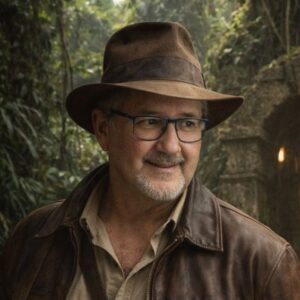 Bruce Hennigan is a physician in the field of radiology and a member of the Scholar Community of Reasons to Believe. He is the author of over eighteen books. He speaks on a regular basis about his struggle with depression.
Comments 3
Yes, my heart burns for those who think they know but really don’t know. Those who are outside the circle who feel like they don’t belong. Thanks for this!
Thanks so much, Bruce, for your blog on Nones, Wons, and Dones. It challenges me and I believe my allegorical fiction series, Children of Eloihim would speak to the Dones and is the one out of these three groups that I feel the most “called” to reach. Story has such power!
Blessings!
What a great reminder of those we are called to reach as Christian writers. Our writing should extend beyond the walls that sometimes keep us from a world who needs to know the God of second chances. So thankful that He is!