
by Sarah Sundin @sarahsundin
Shakespeare tells us, “All the world’s a stage.” For the novelist, the challenge is to take our setting from a cardboard cutout of a stage to illuminating depth.
Choosing Your Setting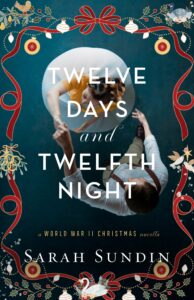
The initial choice of setting is often driven by a story spark. We already know it’s set on the prairie in the 1880s or an English manor in 1815 or a modern-day big city. We also often choose the locations because it’s someplace we’ve visited or want to visit, or it meets story requirements.
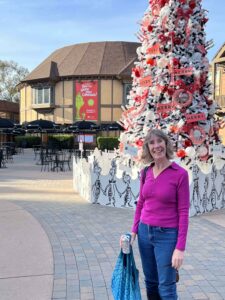
For my Christmas novella Twelve Days and Twelfth Night, the setting chose the story. I wanted to write about a USO show for the sailors in San Diego, to take place at a vintage theater. Then I found picturesque Balboa Park’s Old Globe Theatre, inspired by Shakespeare’s theater. That’s when the fun began.
Plot Inspiration
Every setting comes with history and landmarks, customs and foods. The more you delve into those, the more you’ll find inspiration. Let the scenery enrich your scenes, not only in beauty but in meaning.
Since the Old Globe Theatre was the “star” of my novella, I sprinkled in Shakespearean elements, from mistaken identities to character names to quotes from the bard. However, the real world rarely operates as in Shakespeare’s plays, which sets up an important clash between Maggie’s dramatic optimism and Prescott’s stark realism.
Also, San Diego has a wealth of scenery, from the beaches to the world-famous zoo to the gorgeous buildings of Balboa Park. And that scenery informed the scenes. Zoos are family places, and at the zoo, lonely Prescott realizes he’s found family—but will he lose it when the Christmas show ends its run?
Character Growth
 Symbols are a powerful way to show our character’s internal conflict and growth. Those symbols become more meaningful when they arise from the setting. The rosebushes at the English manor that blossom while the heroine grows—and wilt at her black moment. The bridge over the creek that shows the hero’s determination to become a new man.
In Twelve Days and Twelfth Night, Prescott was badly burned in an accident and has lost his career—and purpose. During World War II, the US Navy requisitioned most of Balboa Park for use by the naval hospital. Hospitals carry the dual symbolism of pain and healing. When Prescott performs on the burn ward, he confronts his worst pain—and finds the path to his greatest healing.
Create Mood
An expanse of prairie—does it represent freedom and the pioneering spirit, or isolation and loneliness? A forest of skyscrapers—does it represent energy and opportunity, or claustrophobia and danger? How can we use our setting to build the mood of our story?
Christmas novellas are meant to be about snow and Christmas trees—not sunshine and palm trees. But I decided to lean into that disconnect between expectation and experience, which mirrored what happened to sailors in World War II far from the familiarity of home during the holidays. The mix of San Diego optimism and “White Christmas” poignancy set the mood for my story.
From Stage to Playground
So what about you? What elements make your setting unique or memorable? How can you use those elements to illumine your story?
 Sarah Sundin is an ECPA-bestselling author of World War II fiction, including Twelve Days and Twelfth Night. Her novels have received the Christy Award and the Carol Award. Sarah lives in California and loves walking her rescue dogs. She serves as co-director of the West Coast Christian Writers Conference. www.sarahsundin.com.