
by Steven Rogers @SRBooksForHope
In my younger days, I often feared being the “third wheel” – the “extra” person when two people were on a date or starting to connect romantically. In these situations, I often felt superfluous and ignored.
What does being a “third wheel” have to do with writing fiction? Well, let’s start with this premise—a good novel rests on top of a three-legged stool. One leg is the plot. One leg is the characters. One leg is the setting. I suspect that we, as fiction writers, sometimes treat setting as the “third wheel” in our writing. We spend significant amounts of time contemplating and perhaps outlining our plot. We may spend weeks learning about our main characters, writing intricate backstories, and figuring out how they will react in different situations. When we consider setting, however, we may hurriedly or haphazardly assemble a description of where events happen and insert further details as we write.
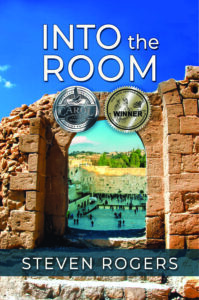 I used this approach in my earlier, unpublished work. Things changed for me when, on a flight to Israel in 2017, God presented an idea for a novel. While writing, I had no choice but to develop the story’s landscape—my main character’s interaction with Biblical history was a major factor in his journey with God. Beta reader input urged me to include the sights, sounds, smells, and reverence of the Holy Land. After a developmental edit, my writing coach commented, “You’ve made Israel a character in your book.” After the resulting novel, Into the Room, was published, I knew I would never downplay the importance of setting again.
Including a strong setting in your narrative offers many benefits. A meaningful setting helps the writer by providing additional touchpoints to describe actions and thoughts. These touchpoints avoid dry prose and help the author to “show versus tell.” A dusty path, isolated room, rain-soaked campground, or antiquated house can often be the difference between flat writing and a powerful reading experience. In addition, a vivid picture of where the story takes place can often help communicate the book’s themes. Two excellent examples are Cheryl Grey Bostrom’s Sugar Birds and Donna Jo Stone’s When the Wildflowers Bloom Again. Both books are Carol Award winners.
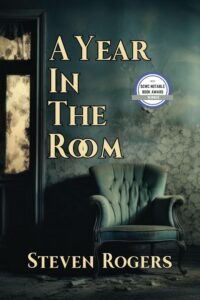 When I started work on my second novel, A Year in the Room, I didn’t have a predetermined setting in mind. I began my research by visiting rural Virginia towns, but none of them resonated with my main character’s journey. After spending a Sunday afternoon touring Richmond, Virginia, I liked the edge and tone of an urban neighborhood and decided to set much of the story on a fictional city block. After that, I considered having my main character walk the El Camino trail in Spain. However, given the myriad of literature and nonfiction books about the historic walking path, I concluded there was nothing new I could add.
Instead, after some conversations with my pastor and a chance meeting with a Presbyterian minister at an REI store, my wife and I spent a week on the Scottish Island of Iona. The Christian history, wide-open landscape, and green fields of the historic location provided the perfect environment for my character to confront God and take his next steps towards redemption.
Don’t make setting the ‘Third Wheel’ in your writing – invest in the landscape of your novel.
I’m not saying you need to travel to Europe or drive all over your state trying to discover a setting for your book. I am suggesting you consider your setting as a canvas—a limitless backdrop on which to paint your story. If your experience is anything like mine, I guarantee you won’t regret the decision.
 Writer and speaker Steven Rogers is the author of the “Reluctant Pilgrim” series. He has written two award-winning novels, Into the Room and A Year in the Room. Steven is also an acquisitions editor for Elk Lake Publishing. He lives in Richmond, Virginia, with his wife, Kathy.
Comments 5
Thank you, Mr. Rogers, for your excellent post. The importance of setting is too often overlooked. Just as an artist needs a background for his painting, so does an author need a background for his story. I’m so glad you addressed this topic. Thank you again!
Hi Steven, I enjoyed reading your perspective on setting. I always knew setting was important, but going forward, I’ll give it my best shot to look at my setting as a canvas to paint on. A great analogy for writers!
Yes! It always bugs me when the setting is skimped on. It leaves me wondering where the characters are and often makes me think they’re in a different world or historical era than intended. I’m also the editor who isn’t afraid to tell my clients when their worlds feel flat like cardboard. Probably harsh, but some readers will care.
Setting sets the tone for sure! Thanks for reminding us the art of storytelling is actually painting a picture that takes flight in the mind of the reader. I bet the island of Iona was amazing! I read once that there is a unique vibe there, and visitors often say they feel closer to God when they are there. Interesting!
I hear that. I visited Iona, too. It’s fascinating. I love a liturgical prayer book I bought there.
My WIP takes place in New Orleans and several other places I love. I hope others who love these places will enjoy being there, with my characters, in my story.