
by Steven Rogers @SRBooksForHope
When you get down to it, there’s no difference between a mad scientist and a fiction writer.
 First, there are physical similarities. If you believe the movies, a mad scientist sleeps three hours a night, their hair sticks out at all angles, their clothes look slept in, and their eyes are buried in caverns deeper than the Grand Canyon. I’d bet most fiction writers look like that in the middle of the drafting process. Secondly, scientists develop a hypothesis and validate their theory by doing things like training rats to run through a maze or shooting lasers off the moon. After collecting data, they either conclude they’ve discovered something or develop another concept. Fiction writers are the same way. We usually invent some unsuspecting characters, surround them with a dysfunctional family and circumstances that would challenge Mother Teresa’s faith, and then figure out ways to deliver the poor souls from the trauma. Along the way, we try different plot devices, character interactions, and dialogue patterns, hoping to create a story readers will enjoy. If we don’t, we revise and start again. Said another way, writers are scientists who use keyboards instead of laboratories.
In my workshop, “Ten Tips for Aspiring Fiction Writers,” I encourage new authors to experiment. At the beginning of the writing journey, authors face a wide variety of questions. What’s my genre? Should I use first- or third-person narration? How will I handle violence, language, and intimacy? Is my dialogue authentic? The only way to answer these questions is to investigate and determine what you’re comfortable doing and what stories you want to tell.
Testing different approaches often creates benefits that stretch beyond practice and self-discovery. For example, a few years ago, I created a character inspired by a quirky young family friend. I initially hesitated because I wasn’t sure if I could make up someone without simply mimicking the person I knew. The only way to find out was to do the writing version of mixing chemicals together in a test tube. After some trial and error, I ended up with a backstory and brief sketch about a forty-something man named Lawyer. Throughout the process, I imagined him at different ages and with varying physical appearances, family structures, and professions.
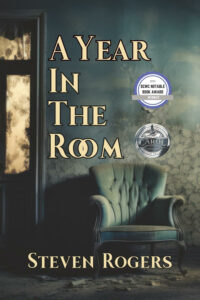 Eventually, Lawyer became a retired Navy cook who runs a coffee shop. After finishing my exercise, I filed Lawyer away as a fun learning experience. However, while writing my novel A Year in the Room, I remembered my new fictional acquaintance. In the end, I inserted Lawyer into the narrative as a major character.
While experimentation may be critical for a new writer, I believe considering different strategies is also important for established authors. After my first Contemporary Christian novel, Into the Room , was published, I decided to attempt something different. For two weeks, I banged away at a Christian Romance story before realizing I was not suited to the genre. Still, my effort was not a failure. Those sixteen pages helped me realize who I am (and am not) as a writer.
Of course, your writing can’t always be theoretical. Eventually, the time comes to put together a comprehensive piece of work. I would argue, though, that the effort spent exploring your wordsmithing skills will always result in a more entertaining novel. So, go ahead. Put on that lab coat and push your boundaries. Who knows what you’ll learn? After all, the microwave oven, penicillin, and potato chips were all discovered by accident.

Writer and speaker Steven Rogers is the author of the “Reluctant Pilgrim” series. He has written two award-winning novels, Into the Room and A Year in the Room. Steven is also an acquisitions editor for Elk Lake Publishing. He lives in Richmond, Virginia, with his wife, Kathy. Visit Steve on his website, Facebook, or on Instagram: @stevenrogerswriter.