
by Sarah Sundin
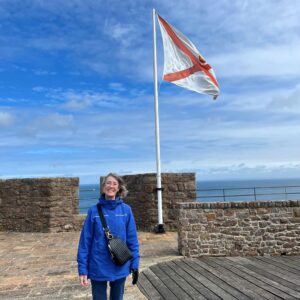 On a chilly and blustery evening, my husband and I traipsed through a German gun emplacement in Jersey in the Channel Islands. I said to him, “Aren’t you glad I don’t write novels set in fussy tea rooms?” The look of horror on his face was priceless.
Aspiring historical novelists often ask for my best tips on writing the genre, and my top tip is that solid research is essential. But what does the research process entail?
Research trips are the glamorous part of writing historical fiction. I call it “suffering for my art.” For Mists over the Channel Islands, we visited the beautiful island of Jersey and explored the charming town of St. Helier, took guided tours of German fortifications, and rode in a DUKW to Elizabeth Castle. That was so fun, we did it twice.
Visiting story locations allows me to get a feel for the landscape and add sensory details to my story. An extra bonus is chatting with residents, like our extremely knowledgeable tour guide who helped explain why Jersey is part of Britain but not part of the United Kingdom and told us some of the island’s rich culture.
Most novel research isn’t so glamorous. Some is fascinating, some is tedious, and some is frustrating, but I enjoy the process immensely.
When I’m first developing a story idea, I do basic research to make sure my idea works historically and to find ideas to build the plot and characters. The idea then percolates for a few years as I finish other projects. During that percolation time, I make a list of books and websites that will help.
Then it’s finally time to work on the new story! I begin with general books about the topic. For Mists over the Channel Islands, this meant researching Jersey during World War II, Germany’s Organisation Todt, and medical practice in the 1940s. 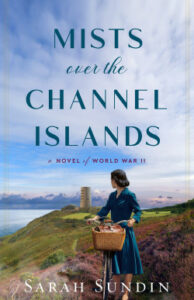
Because I have a deadline, I prioritize my research, starting with the books and sites that provide the most and best information. I also follow the order of the story, first researching what’s needed for the first act of the story—this allows me to start my rough draft even though I’m still researching.
I also do what I call “spot research,” when I’m writing a scene and realize I need to know what road my heroine will take or traditional Christmas foods on the island—and how those were modified with wartime rationing and shortages.
For this novel, I read a memoir of a physician in Jersey during the occupation, since my heroine is a physician. I scoured the Jersey War Tours website which has detailed maps and diagrams and photos of the German fortifications, since my hero is an engineer with Organisation Todt (working undercover with the resistance, so we’re okay). My favorite book was a signed copy of The German Occupation of Jersey: The Complete Diary of Events by Leslie Sinel. Sinel was a reporter with the Jersey Evening Post, who kept a detailed day-by-day journal of the events on the island, most of which couldn’t be reported in the German-censored newspaper. Keeping this journal could have landed Sinel in a concentration camp—and he kept it carefully hidden—so it’s even more meaningful. Some of these resources might seem boring to others, but they interested me because they affected my characters and their stories.
Researching a historical novel is a long process, but it’s worth it when the story makes history come to life in readers’ minds.
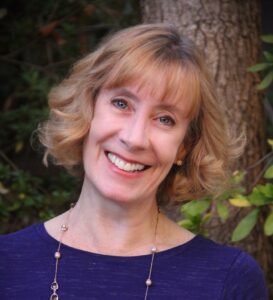 Sarah Sundin is an ECPA-bestselling author of World War II novels, including Mists over the Channel Islands. Her novels have received the Christy Award and the Carol Award. Sarah lives in Southern California and serves as co-director of the West Coast Christian Writers Conference. Visit her at www.sarahsundin.com.
Comments 4
So interesting. Nice that you have a husband who accompanies you on your research adventures.
It is! He loves history and travel as much as I do! Truly a blessing.
Thank you so much, Sarah! I can’t wait to ready the book (already have my copy).
I love hearing historical fiction writers’ process. One question as I deliberate visiting locations for further research: at which point in your research/drafting process did you visit Jersey (and at which point typically works best for you)?
In an ideal world, I’d go on a research trip early in the outlining/rough drafting phase. That’s when I know exactly what questions to ask and what sights to see. However, time and finances don’t cooperate 🙂 I usually make one trip for all three books on a contract. We went on a trip to London, Scotland, and Jersey after my novel Embers in the London Sky had already released (but I’d already been to London – and I picked up some fun photos for a blog post & giveaway), during my publisher’s edits for Midnight on the Scottish Shore (so I was able to add all the sensory details and new research tidbits), and very early in my outlining process for Mists over the Channel Islands. It worked.