
by Barbara M. Britton @BarbaraMBritton
America celebrated her 250th birthday, and the Constitution was the topic of conversation. The document that formed our government and protected rights gave a nod to artists. Were you aware that our Founding Fathers cared about your writing?
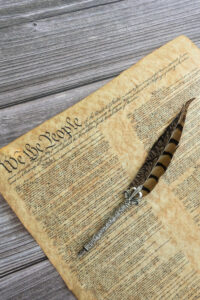 In Article I, Section 8, Clause 8, we are told that Congress shall have power to:
promote the progress of science and useful arts, by securing for limited times to authors and inventors the exclusive right to their respective writings and discoveries.
For America to succeed, she needed invention and creativity. Literature fostered learning, and an educated public benefited the country. It takes time, treasure, and talent to write books or invent a widget. The Founders valued intellectual property and bestowed copyright protection for years. The number of years an artist has protected rights has changed over the years.
In 1998, Congress passed the Copyright Term Extension Act. This gave copyright protection to an author for their lifetime plus seventy years. That’s a long time. If you do the math, your children and grandchildren may be managing the rights to your books, poems, scripts, or any other creative work.
When you have your end-of-life documents created, make sure your attorney addresses your intellectual property. Your writing will need to be managed, and you will need to designate who receives the proceeds.
For many years, I had an attorney who told me I didn’t need to address my writing in my will/trust. That was not good advice. Our new attorney was very thorough in addressing my intellectual property.
Be proactive and seal the deal with your intellectual property by registering your writing with the U.S. Copyright Office. There is a cost to this registration, but any court entanglements will require a government registration. After you register a work online, the Library of Congress will mail you a certificate of registration with a TXu number. Each book you write will need to be registered individually.
With the rise of AI lawsuits and scammers impersonating authors, it is important to have a copyright registration. The official letter is a fast and easy way to prove authorship and ownership.
Make sure to place your important papers—contracts, copyright registrations, book information—somewhere accessible and tell your family where your important documents are located.
Writers like to create stories, but these works of art have protections for several years. Make sure you make it easy for your family to steward your intellectual property long after you are gone.
 Barbara M. Britton is a multi-published author of Christian Fiction. Her Tribes of Israel series brings little-known Bible stories to light. You can also travel to Whispering Creek, Tennessee with her sweet romance duology. Barbara takes us to the Sea of Galilee in her new Biblical Fiction Bible study. Find out more about Barbara’s books on her website barbarambritton.com.
Comments 2
Thank you for this valuable info and the cautions regarding the importance of copyrights. I like many authors thought that my publisher had copyrighted the book, but that is different than registering it with the Library of congress
Hi Linda,
Thank you. I recommend an author register the copyright with the U.S. Government Copyright Office. Publishers usually don’t register the copyright unless it is written in the publishing contract. Even then, an author should follow up. Ai makes registering a copyright crucial.