
By Joni M. Fisher @authorjonimfisher
I challenge you to write a novel in a month. It sounds impossible, but hear me out. How many
best-selling authors publish a book every year? Barbara Cartland, the Queen of Romance, wrote
over 700 novels. Isaac Asimov wrote 500. Nora Roberts has written 225. James Patterson has
100. John Grisham has over 50.
Calculate how many books you can write at your current pace and life expectancy. Hold that
“yes, but” and read on.

Powerful Laptop Computer — Image by © Royalty-Free/Corbis
HOW?
One popular method for writing faster was known to participants as NaNoWriMo, it stood for National Novel Writing Month. For twenty-six years, it was a month-long marathon of writing that freed people to write so fast and with such wild abandon that the lazy, mean-spirited inner critic could not possibly keep up. The writing marathon began every November until this year, when the use of AI and other issues led to the destruction of the NaNoWriMo non-profit organization. The glorious craziness of NaNoWriMo invited people all over the world to slam out 2,000 words a day or more to produce a 50,000-word first draft. The organization is gone, but the method lives on. Do it once and you’ll be hooked.
WHY?
Granted, that feverishly written first draft is ugly in epic proportions. Oh, but here’s a huge
benefit. While pounding out two thousand words a day, you break the creative sound barrier and
can no longer hear the distracting whines of your inner critic. The voice of the nag might sound
like your grade-school English teacher or a loved one with whom you carelessly shared a draft
version of a story. The destructive nature of your inner critic paralyzes creativity. Shove that nag
into a closet until the editing stage.
The peace from speed arrives like a runner’s high. Endorphins flood the bloodstream. Caffeine
feels like jet fuel. You produce typos, misspellings, and grammar blunders galore. NOBODY
CARES because the point is to get 50,000 words done in 30 days. Think of this as your first
draft, the pile of fertilizer out of which your story will grow. Keep writing!
Another benefit of speed is that writing 2,000 words a day brings out your unique, natural
narrative voice, stripped of pretentious vocabulary and fancy complex sentences. Your writing
will sound like the raw, unfiltered you. Readers long for authenticity and vulnerability. Let go of
trying to impress and aim for accuracy, brevity, and clarity. Tell the deep truth.
As someone who has participated in this madness for years, here are a few tips. Set aside
October to plot scenes, design your hero or heroine, craft a worthy villain, and choose a setting in
which to unleash the story. I am a plotter. If you write by the seat of your pants (you wild
pantser), then all you need to do is start thinking about your story, right?
The second, third, and fourth drafts refine the beautiful prose, incorporating nuanced layers and
multiple plotlines. Editing magic transforms that oh-so-rough draft into serious storytelling. Even
if it takes weeks or months, you have a running start at your next novel. Clean up the typos, flesh
out the scenes, clarify whose story this is, craft those poetic figures of speech, and nail down the
evocative details. Invite the inner critic to offer helpful suggestions only.
Although NaNoWriMo has gone the way of the manual typewriter, I will continue to embrace
the race. Stocked up on caffeine. Schedule cleared. Music playlist cued up. If you need me for
anything in November, text me. I’ll check messages during potty breaks. I’m all in. My family, in
support, will sneak a plate of Thanksgiving dinner beside my laptop.
Outrun your inner critic. I dare you to take this speed challenge.
Are you in?
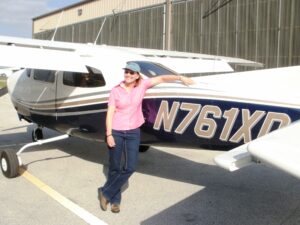
Joni M. Fisher writes contemporary stories featuring friendship, family, faith, and crime. A member of the American Christian Fiction Writers and the Florida Writers Association, she also served on the Southeastern University Arts and Humanities Advisory Board. Her fingerprints are on file with the FBI. And she’s a private pilot.
Comments 8
I enthusiastically agree that this is a worthy goal. If you are not a “pantser” then you just have to get all your outlining done ahead of time, as Joni’s article suggests doing in October, so that you are ready to start writing. While I haven’t written a whole novel in a month, I have succeeded in lesser goals such as a submission-ready short story in 5 days. It can be done.
Thanks, Scott! It’s a marathon, but crazy fun. I double-dog dare you to write 50,000 words in 30 days.
Getting words down quickly is my usual method. Though it’s usually because I’m way behind leaving myself little choice but to pump out words quickly.
It’s been years since I’ve done NanoWrimo, but I may try the new Novel November this year since I just finished two books, the timing is right to start another one. I think ProWritingAid is hosting it.
Love the blog post.
Hello, Elle!
Thanks for the news that Novel November has filled the void!
When I first started writing in 2018 I learned about Nanowrimo about a week before it started and jumped in with both feet. I pumped out 50,000 words in 3 weeks and had a completed novel by the end of February! I did it again in 2019, but haven’t done it since, hence the fact it’s 2025, and I have only completed those two novels. I’ve been working on a third for many months and can’t seem to turn off my inner editor and get the words on the page. I needed this reminder (again!) to just let this first draft be messy. Thanks!
Deena,
You can do it again! Make it a three-peat! I’m cheering for you from Florida!
I recently had a serious kidney infection and was hospitalized for about 2 weeks. At first, I was pretty weak from the infection, but I soon told my hubby to bring my laptop to the hospital. I knocked out 20,000 words before I left. Basically, in about a week. With no distractions, it was a lot easier. Since I’ve been home, I have been working on social media. I need to get back to the manuscript.
I left the hospital so rested and feeling great about my current WIP. I told the nurses I’d be back next year for more R&R and speed writing. Does it count as a writer’s tip to tell someone to check into a hospital?
I got busy today and wrote almost 4,000 words. Rough draft, but done!